
Reviewed · ST MAARTEN NATURE & HIKING TOURS
St.Martin – St.Maarten: Small Group, Birding Tour / Bird Watching Tour
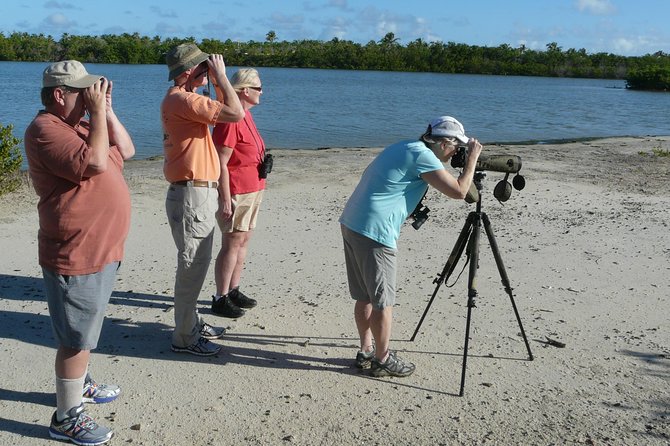
Morning birding feels like clue-finding. This St. Martin–St. Maarten bird-watching tour takes you across salt ponds, coastlines, and shore habitats with an expert nature guide (you might hear names like Bindie or Ilja), plus a cozy coffee-and-cake stop to talk through what you’re seeing.
I love how the route targets different habitats instead of one scenic overlook. I also like that you get practical spotting tools (like binoculars) and a simple way to track birds on the provided notepad.
One real drawback to plan for: this works best early, and the tour starts at 7:30am, so it’s not the choice if you want a late start.
In This Review
- Key highlights to know before you go
- Why St. Martin’s birding tour feels more like fieldwork than sightseeing
- The 7:30am start, small-group format, and what you’ll actually do
- Dock Maarten meeting point: the practical start to a focused morning
- Salt ponds and coastal edges: where shore birds and waders do their work
- Fresh pond, bushy cover, and sandy shore: the “land birds in disguise” section
- What your guide teaches: behavior, habitats, and migration context
- The coffee-and-cake pause: turning sightings into real learning
- Binocular use and sighting notes: small tools that pay off fast
- Price and value: is $129 fair for a 4-hour birding morning?
- Who this tour suits best on St. Martin
- What to bring so you get the most out of the morning
- Should you book this St. Martin birding tour?
- FAQ
- FAQ
- What time does the bird-watching tour start?
- How long is the tour?
- Where do I meet for the tour?
- Is pickup available?
- How many people are in the group?
- What is included in the price?
- Are there any estimated bird species I can expect to see?
- What habitats does the tour visit?
- What is not included?
- Can I cancel for a refund?
Key highlights to know before you go
- Small group of up to 3: easier questions, less time waiting at each birding spot
- Multiple habitats in ~4 hours: salt pond, fresh pond, bushy areas, and sandy shore
- Aiming for up to 30 species: with roughly 6–10 native to the Lesser Antilles
- Binoculars plus sighting notes: you’re set up to actually learn what you’re seeing
- Coffee and cake break: a relaxed pause to compare sightings and behaviors
- Pick-up from select St. Maarten hotels: fewer logistics, more time watching birds
Onto the trails and quiet coves, more of wild St Maarten
- The Original Eco Tour Full-Day Around the Island of Sint Maarten★ 5.0 · 518 reviews
- Private Speed Boat Charter in St Maarten & Nature Reserve★ 5.0 · 83 reviews
- Guana Bay Coastal Hike★ 5.0 · 44 reviews
- St.Martin – St. Maarten: Small Group, Coastal Hike & Swim Tour★ 5.0 · 39 reviews
Why St. Martin’s birding tour feels more like fieldwork than sightseeing
St. Martin birding is interesting because the island gives you “right now” habitat variety in a short day. You’re not stuck in one kind of scenery. You bounce between salt-water ponds, fresh-water areas, bushy cover, and rocky or sandy coastlines—the exact mix that attracts shorebirds, wading birds, and little songbirds that use trees and shrubs or even urban edges.
The guides on this tour are focused on behavior, not just names. You’ll learn how birds use different parts of the same shoreline differently—some feed in shallows, some pick through vegetation, and some show up because the habitat is right, not because the view is dramatic. And because Caribbean islands can act as stopover points during migration, you’re likely to get context for why certain species show up on St. Martin during particular seasons.
The 7:30am start, small-group format, and what you’ll actually do
This is a short, guided morning at about 4 hours (often described as around 3.5 hours), starting at 7:30am. The early timing matters: birds feed more actively, light is better for spotting, and you’re not battling midday heat and glare.
Your group size is capped at 3 travelers. That changes the feel. You’re more likely to get direct help sorting out a tricky ID, and you can ask questions without the guide rushing to keep a larger group moving. In birding, small differences matter—bill shape, posture, wing bars—so that one-on-one-style attention is a real advantage.
The tour includes use of binoculars, plus a notepad for recording sightings. That sounds basic, but it turns a walk into a usable bird log. If you like comparing what you saw later, or you want to sharpen your skills for lifers (new species), this note-taking piece helps.
Dock Maarten meeting point: the practical start to a focused morning
You meet at Dock Maarten Marina, along Battery Point Drive #1 on Juancho Yrausquin Blvd. The tour ends back at the same meeting point, so you’re not dealing with complicated drop-offs.
If you’re driving, parking is available for a short window at the dock area: $2 for the first hour and $1 for each additional hour. If you’re staying at a hotel in the select pickup zone, you’ll have round-trip transportation, which is usually worth it—early mornings are when you want zero friction.
If you’re bringing your own binoculars, you can, but the included pair is fine for most birders. Either way, expect a walking-and-stopping rhythm: you’ll move between habitats, then pause long enough for the guide to point out what to look for.


Salt ponds and coastal edges: where shore birds and waders do their work
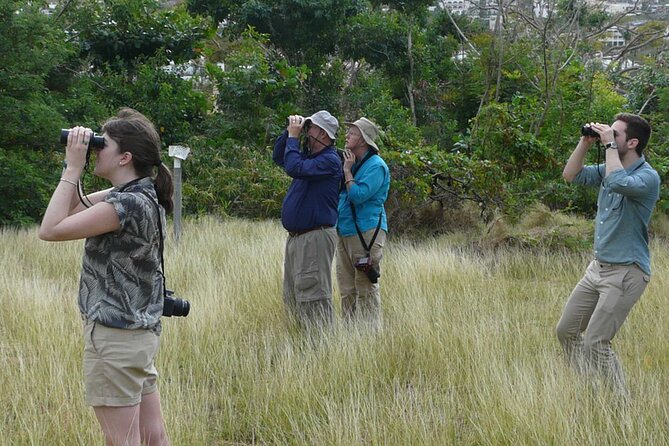
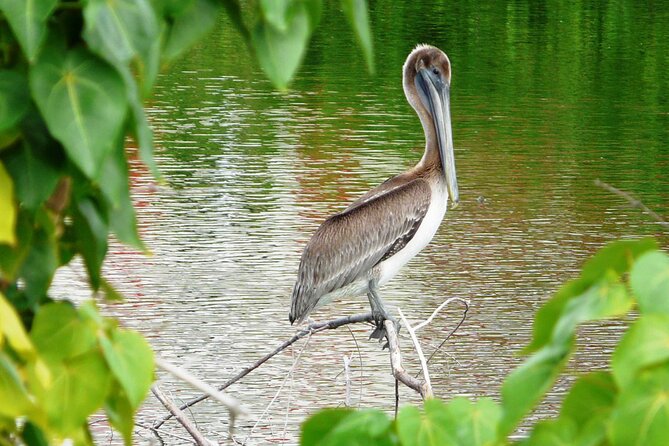
One of the smartest parts of this tour is how it builds in water-and-coast targets right away. At least one salt pond is on the plan, and you also visit rocky and/or sandy shoreline environments. That mix is ideal for birds that specialize in feeding where water meets land.
Here’s what you’ll likely notice as you scan:
- Shore birds that probe and pick along edges
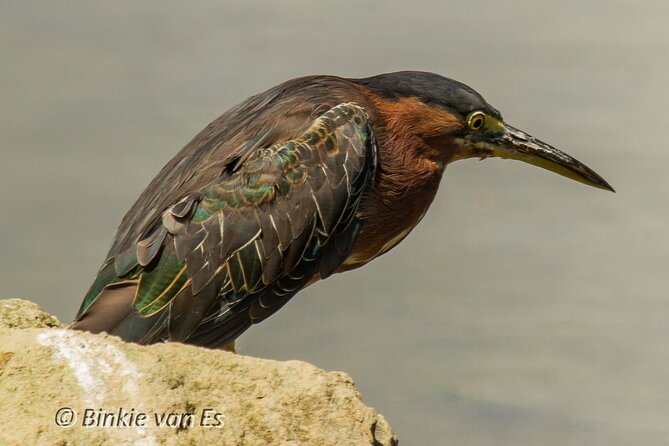
- Wading birds that stand and wait, then strike fast
- Birds that use the transition zone—where the shoreline changes from wet sand to rock or sparse vegetation
Because birds in these habitats are often moving in small bursts, patience matters more than chasing. The guide’s job is to help you spot patterns—where to look based on water depth, shoreline texture, and vegetation edges—so you’re not guessing.
A good birding strategy here is simple: don’t stare at one patch for too long. Use short scans, then follow the guide’s pointer to adjust your focus. That’s how you end up adding more species during the limited morning hours.
Fresh pond, bushy cover, and sandy shore: the “land birds in disguise” section
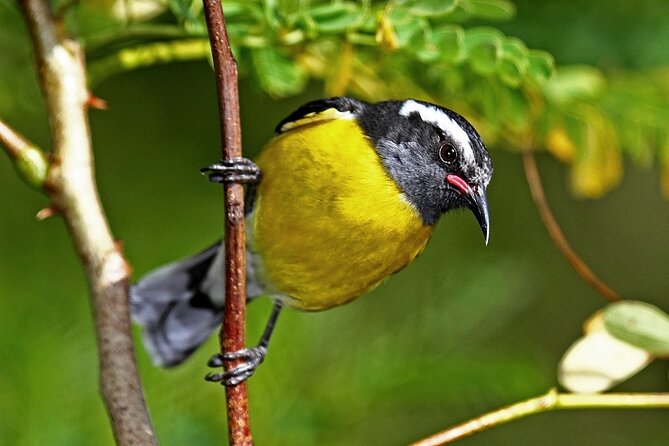
After the water-focused stops, the tour adds habitats that change the bird mix fast. You’ll visit a fresh pond (or fresh-water area) plus a bushy area and sandy shore.
This is where your list can start expanding beyond just shore and waders. Fresh and bushy habitats can pull in birds that:
- Use shrubs or small trees for shelter and foraging
- Move through cover rather than staying out in the open
- Show up near human-adjacent settings if the habitat conditions are right
You’re also told to expect native species connected to the Lesser Antilles, with an overall target of 6–10 of those among the up to 30 species you might encounter. That doesn’t mean you’ll see every “target” bird on every morning—birding is never that tidy—but the itinerary is structured to maximize the chances.
One more reason these stops are valuable: you get practice reading habitat, not just chasing one bird. You’ll start to connect a place type (bushy cover, fresh water, sand edge) with the bird behavior it supports. That kind of mental map makes future birding on the island easier.
What your guide teaches: behavior, habitats, and migration context
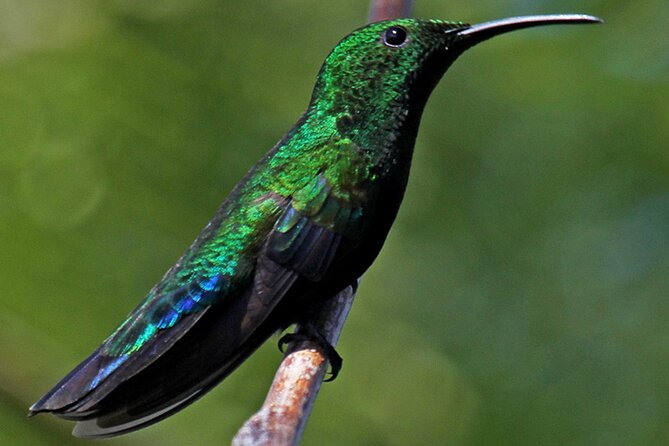
The best bird guides don’t just say what species are present. They explain what birds are doing and why. On this tour, the guide is set up to talk about habitat use—how birds coexist, and how some don’t (because food and space needs overlap). You also get migration context that can make a sighting feel bigger than the moment.
One guide discussed migration paths and how Caribbean islands can act as important stepping-stones on the way to South America. Even if you’re not tracking migration like a scientist, that’s useful framing. It helps you understand why the same locations can produce different results in different seasons.
You’ll also hear practical field advice during stops: what to look for, where to stand, and how to avoid wasting time on birds that aren’t really feeding. And if you’re someone who cares about life birds, guides like Bindie (described in past outings as an island eBird reviewer) can help you work through IDs with less guesswork.
The coffee-and-cake pause: turning sightings into real learning
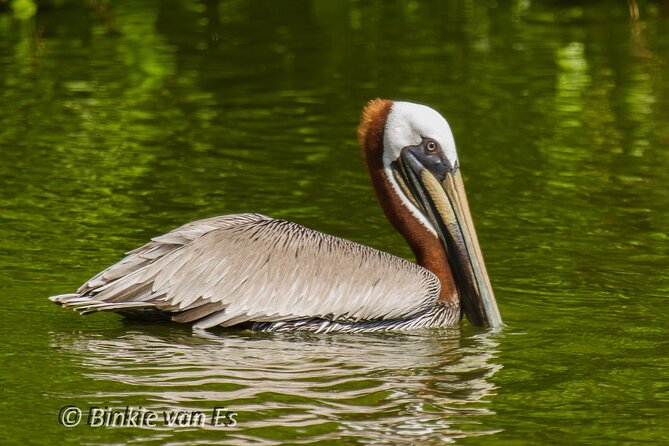
About halfway (depending on timing and what birds are active), you take a break for coffee and/or tea plus cake, with home-made iced-lemongrass tea specifically noted. You’ll also get snacks like home-made banana bread, plus bottled water.
This stop matters more than it looks. It gives you time to compare notes while everything is fresh in your head—what each person saw, what direction the birds moved, and which habitat produced which kind of behavior. And because you’ve been recording sightings on the notepad, the guide can help you connect your notes to likely species groups.
I like breaks like this because they prevent birding from turning into nonstop scanning. You keep your energy, and you come back sharper for the last stretch.
Binocular use and sighting notes: small tools that pay off fast
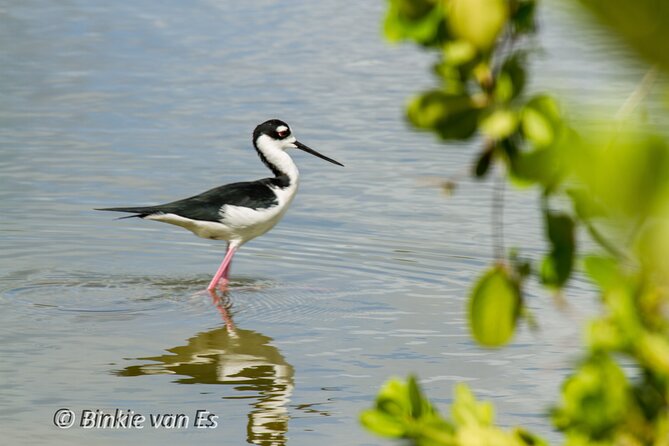
It’s easy to underestimate how much binocular support affects your success. This tour includes binoculars, which levels the playing field. Even if you’ve got decent eyes, birding often comes down to details—wing shape, leg length, and small patterns that can’t be confirmed with the naked eye.
The notepad also helps in a very practical way. During a short tour, memory can get unreliable. If you write down where you saw something (salt pond edge vs. bushy cover vs. sandy shore) along with rough timing, you’re far more likely to remember what mattered for identification later.
If you want to get extra value, you can do this: when the guide calls out a likely species, write just one or two key traits. For example, focus on posture (standing vs. probing) and feeding behavior. Those are traits you can recognize again on your next outing.
Price and value: is $129 fair for a 4-hour birding morning?
At $129 per person, you’re paying for more than “a walk with binoculars.” This is guided habitat-hopping with included spotting gear, a small group size, and a food-and-drink break.
Here’s what makes it feel like good value for the money:
- Small group of up to 3 reduces wasted time and increases help with ID
- Round-trip transportation from select hotels can save you hassle (and taxi cost)
- Binoculars included means you’re not forced to rent or bring gear
- Coffee/tea, cake, banana bread, and water are real perks, not just a token snack
If you’re the kind of traveler who enjoys structured learning and wants to see multiple habitat types quickly, this price can make sense. If you only want casual scenery photos and don’t care about bird IDs, you might decide a self-guided morning walk elsewhere is cheaper. But for birders, the included guide expertise and targeted route are the value.
Who this tour suits best on St. Martin
This is a great fit if:
- You want a focused birding session without planning stops yourself
- You like learning how birds use salt and fresh water and different shorelines
- You prefer a quiet, small-group pace where you can ask questions
- You’re a beginner who wants help naming birds, or an intermediate birder who wants better field technique
It may be less ideal if:
- You strongly dislike early starts and long scanning sessions
- You expect a full-day hiking adventure with lots of wandering time
- You’re hoping for guaranteed specific species every single morning
What to bring so you get the most out of the morning
The tour includes binoculars and refreshments, so you’re not starting from zero. Still, you’ll want your own basics:
- Sun protection (morning can still be bright near the coast)
- Comfortable shoes for short stops and uneven ground
- A lightweight layer if the early air feels cool
- Your own phone or camera if you like logging sightings (the tour gives the notepad, but you may want a photo reference too)
And mentally, go in expecting movement. Birds don’t sit still on schedule. Your odds improve when you stay flexible and follow the guide’s habitat logic.
Should you book this St. Martin birding tour?
I’d book it if you want a high-attention birding morning with the island’s habitat variety built into a short plan. The combination of a small group (up to 3), included binoculars, and a guide who focuses on habitat and behavior is exactly what helps you see more and understand more. Add coffee, cake, and home-made iced-lemongrass tea, and it feels like a proper morning out—not a rushed “look and leave.”
Skip it if you don’t want early starts, or if you’re expecting a long beach stroll instead of targeted bird-watching. If that sounds like you, choose a slower plan and bird on your own time.
FAQ
FAQ
What time does the bird-watching tour start?
The tour starts at 7:30am.
How long is the tour?
It runs for about 4 hours (approximately 3.5 hours is also noted).
Where do I meet for the tour?
The meeting point is Dock Maarten Marina, Battery Point Drive #1, 26 Juancho Yrausquin Blvd, Sint Maarten, and the tour ends back at the meeting point.
Is pickup available?
Pickup is offered from select St Maarten hotels.
How many people are in the group?
The tour has a maximum of 3 travelers.
What is included in the price?
Included items are a local guide, use of binoculars, home-made banana bread, home-made iced-lemongrass tea (coffee and/or tea are also mentioned), bottled water, and a complimentary notepad for recording sightings.
Are there any estimated bird species I can expect to see?
The tour highlights up to 30 species of birds, including about 6–10 species native to the Lesser Antilles.
What habitats does the tour visit?
You’ll visit at least one salt pond, one fresh pond, a bushy area, and a sandy shore, plus rocky and sandy coastal areas are mentioned as part of the exploration.
What is not included?
Souveniers and personal expenses are not included. Dock Maarten parking is also not included.
Can I cancel for a refund?
Yes. There is free cancellation up to 24 hours in advance for a full refund. If you cancel within 24 hours of the start time, the amount you paid is not refunded.
More Tour Reviews in St Maarten
- Captain Bob Speed Boat, Snorkeling, Beach Tour & Lunch St Maarten
★ 5.0 · 4,336 reviews - For hotel guests: Guided ATV Tour Dutch/French St. Maarten – Highlights & Beach
★ 5.0 · 1,766 reviews - For cruise passengers: Guided ATV Tour of Dutch & French St. Maarten
★ 5.0 · 1,552 reviews - The Best Catamaran Day Sail in St Maarten
★ 5.0 · 1,552 reviews - St. Maarten Best Island Tour
★ 4.5 · 1,021 reviews
More Trails and Quiet Coves
- The Original Eco Tour Full-Day Around the Island of Sint Maarten
★ 5.0 · 518 reviews - Private Speed Boat Charter in St Maarten & Nature Reserve
★ 5.0 · 83 reviews - Guana Bay Coastal Hike
★ 5.0 · 44 reviews - St.Martin – St. Maarten: Small Group, Coastal Hike & Swim Tour
★ 5.0 · 39 reviews - St.Maarten Nature, Hike & Snorkeling
★ 5.0 · 27 reviews
Fresh off the boat: newer St Maarten write-ups




St Maarten Nature & Hiking Tours, compared.
 ★ 5.0The Original Eco Tour Full-Day Around the Island of Sint MaartenFrom $149518 reviews
 ★ 5.0Private Speed Boat Charter in St Maarten & Nature ReserveFrom $39883 reviews
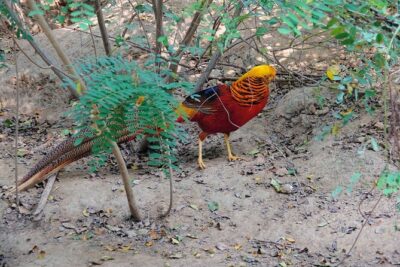 ★ 5.0Colorful Species Of BirdsFrom $4959 reviews
 ★ 5.0Guana Bay Coastal HikeFrom $4044 reviews
 ★ 5.0St.Martin – St. Maarten: Small Group, Coastal Hike & Swim TourFrom $8939 reviews
 ★ 5.0St.Maarten Nature, Hike & SnorkelingFrom $7527 reviews
 ★ 4.0St. Martin or St. Maarten: Nature Hike Secret Beach TourFrom $893 reviews
Browse the lists this tour appears in